Do Barndominiums Need Insurance?
Yes, barndominiums require homeowners insurance if you have a mortgage, and it is strongly recommended even without a loan. Most standard homeowners insurance policies can cover barndominiums, though some insurers classify them as specialty structures that require non-standard dwelling policies.
If you are financing your barndominium through a construction loan or mortgage, your lender will require proof of homeowners insurance before closing. This is not optional -- it is a condition of the loan. The lender needs assurance that their collateral (your building) is protected against fire, storms, theft, and other covered perils. For a complete overview of barndominium financing requirements including insurance, see our complete guide to barndominiums.
Even if you own your barndominium outright with no mortgage, carrying insurance is a financial necessity. A barndominium represents a significant investment -- typically $100,000 to $500,000+ depending on size and finish level. Without insurance, a single fire, tornado, or major storm could destroy that investment entirely, leaving you with nothing but a concrete slab and a pile of debris.
The good news is that insuring a barndominium has become significantly easier over the past decade. As steel-framed residential construction has grown in popularity across the United States, insurance carriers have adapted their underwriting to accommodate these structures. Ten years ago, finding barndominium insurance required specialty brokers and non-standard markets. Today, many mainstream carriers write standard homeowners policies for barndominiums without issue, especially when the home is built to code, fully permitted, and used as a primary residence.
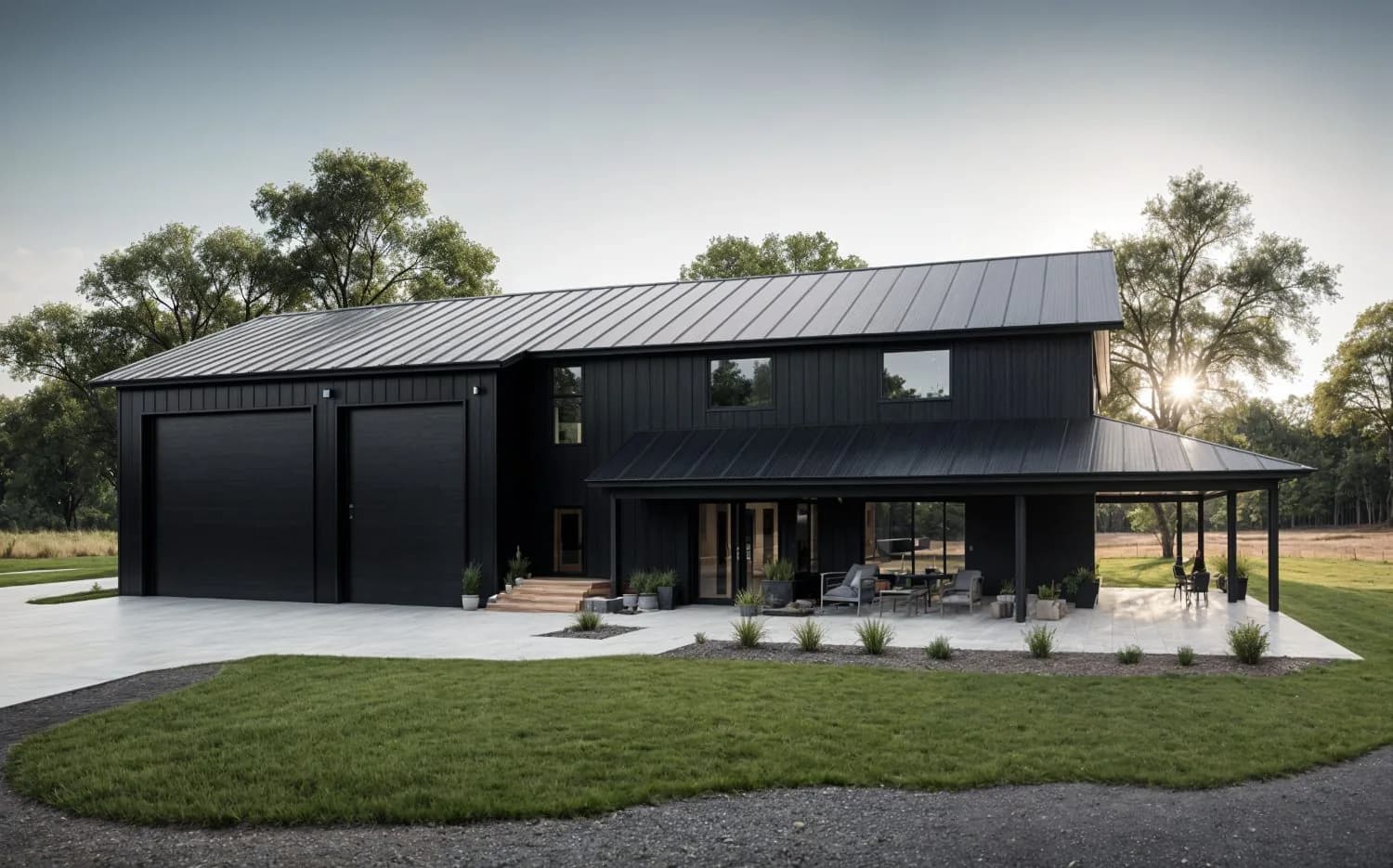
Barns & Barndos Insight: One of the biggest advantages of building with a turnkey builder is the documentation package you receive at project completion. Every Barns & Barndos build includes structural engineering drawings, all permit records, inspection reports, material specifications, and our 50-year PVDF exterior warranty. This documentation makes insurance underwriting straightforward because the insurer can see exactly how the building was constructed, what materials were used, and that everything meets local building codes.
How Much Does Barndominium Insurance Cost?
Barndominium insurance typically costs $1,500 to $3,000 per year for standard homeowners coverage. Steel-framed barndominiums may qualify for lower insurance rates due to their superior resistance to fire, wind, hail, and termite damage. The exact premium depends on your location, dwelling coverage amount, deductible, and the construction materials used.
The national average for homeowners insurance on a standard single-family home is approximately $2,200 per year. Barndominium premiums fall within a similar range, though steel construction can push you toward the lower end of that spectrum if your insurer recognizes the fire and wind resistance benefits of metal buildings.
Here is how barndominium insurance premiums typically break down by coverage level and dwelling value:
| Dwelling Coverage | Estimated Annual Premium | Monthly Cost |
|---|---|---|
| $150,000 | $1,200 - $1,800 | $100 - $150 |
| $250,000 | $1,500 - $2,400 | $125 - $200 |
| $400,000 | $2,000 - $3,200 | $167 - $267 |
| $600,000 | $2,800 - $4,500 | $233 - $375 |
| $800,000+ | $3,500 - $6,000+ | $292 - $500+ |
These estimates assume a standard HO-3 or HO-5 homeowners policy with a $1,000-$2,500 deductible, $100,000 in liability coverage, and typical personal property limits. Premiums vary significantly by state -- homeowners in Florida, Texas, Louisiana, and Oklahoma pay substantially more than those in the Midwest or Mountain West due to hurricane, tornado, and hail exposure.
How Barndominium Insurance Compares to Traditional Home Insurance
In most cases, barndominium insurance premiums are comparable to or slightly lower than premiums for a traditional stick-built home of the same value. The savings come primarily from the fire resistance of steel construction. Wood-framed homes are classified as combustible construction (ISO Construction Class 1), while steel-framed buildings may qualify as fire-resistive or non-combustible construction (ISO Construction Class 4-6), which carries lower fire risk ratings.
However, the insurance cost advantage of steel construction can be offset by other factors. If your barndominium is in a rural area far from a fire station, the distance-to-fire- department rating can increase your premium. Similarly, if your property is on a large acreage with limited fire hydrant access, that affects your rate regardless of the building material.
What Does Barndominium Insurance Cover?
Barndominium insurance covers the dwelling structure, personal property inside the home, liability protection, loss of use (additional living expenses), and other structures on the property. A standard HO-3 homeowners policy covers the dwelling against all perils except those specifically excluded, while personal property is covered for named perils.
Understanding exactly what your barndominium insurance policy covers -- and what it does not -- is critical. Insurance policies are contracts, and the details matter enormously when you file a claim. Here is a breakdown of the six primary coverage categories in a standard homeowners policy:
Coverage A: Dwelling Protection
This is the core of your policy. Dwelling coverage pays to repair or rebuild your barndominium if it is damaged or destroyed by a covered peril such as fire, windstorm, hail, lightning, or falling objects. You should insure your barndominium for its full replacement cost -- the amount it would take to rebuild the structure from scratch at current construction prices, not the market value or the amount you paid to build it.
For a barndominium built by Barns & Barndos at the Standard tier ($250 per square foot), a 2,000 square foot home would need approximately $500,000 in dwelling coverage. If construction costs have increased since your build date, you should adjust your coverage upward to keep pace. Most insurers offer an inflation guard endorsement that automatically increases dwelling coverage by 2-4% annually.
Coverage B: Other Structures
This covers detached structures on your property such as barns, sheds, fences, detached garages, and workshops. Coverage B is typically set at 10% of your dwelling coverage amount. If your dwelling coverage is $400,000, other structures coverage would be $40,000. This limit can be increased if you have significant outbuildings that would cost more to replace.
Coverage C: Personal Property
Personal property coverage protects the contents of your barndominium -- furniture, clothing, electronics, appliances, tools, and other belongings. Standard policies set personal property coverage at 50-70% of your dwelling coverage amount. For a $400,000 dwelling policy, that translates to $200,000-$280,000 in contents coverage. High-value items such as jewelry, firearms, art, and collectibles may have sub-limits that require separate scheduled coverage.
Coverage D: Loss of Use
If your barndominium is rendered uninhabitable by a covered loss, loss of use coverage pays for temporary housing, meals, and other additional living expenses while your home is being repaired or rebuilt. This is particularly important for barndominiums because rural locations may have fewer rental options nearby, potentially requiring you to rent a home farther away at higher cost.
Coverage E: Personal Liability
Liability coverage protects you if someone is injured on your property or if you accidentally cause damage to someone else's property. Standard policies include $100,000-$300,000 in liability coverage, though most insurance professionals recommend at least $300,000-$500,000 for homeowners with acreage, workshops, or other activity areas where accidents could occur.
Coverage F: Medical Payments to Others
This covers minor medical expenses for guests injured on your property, regardless of fault. Standard limits are $1,000-$5,000 per person. This coverage handles smaller incidents (a guest trips on your porch steps) without requiring a formal liability claim.
Key Takeaways: Barndominium Insurance Coverage
- Insure for replacement cost, not market value -- your dwelling coverage should reflect what it would cost to rebuild at current construction prices
- Personal property coverage is typically 50-70% of dwelling coverage; schedule high-value items separately
- Liability coverage of at least $300,000-$500,000 is recommended for property owners with acreage or shop areas
- Loss of use coverage is critical for rural barndominiums where temporary housing options may be limited
- Review your policy annually and adjust dwelling coverage upward to account for construction cost inflation
What Factors Affect Barndominium Insurance Rates?
The primary factors that affect barndominium insurance rates are construction material (steel vs. wood), geographic location, dwelling replacement cost, distance to fire station, square footage, age of the building, deductible amount, claims history, and whether the property has a shop or mixed-use component. Of these, location and replacement cost have the largest impact on premiums.
Insurance companies use dozens of data points to calculate your premium. Understanding which factors carry the most weight helps you make informed decisions about your coverage and identify opportunities to lower your rate.
1. Construction Material
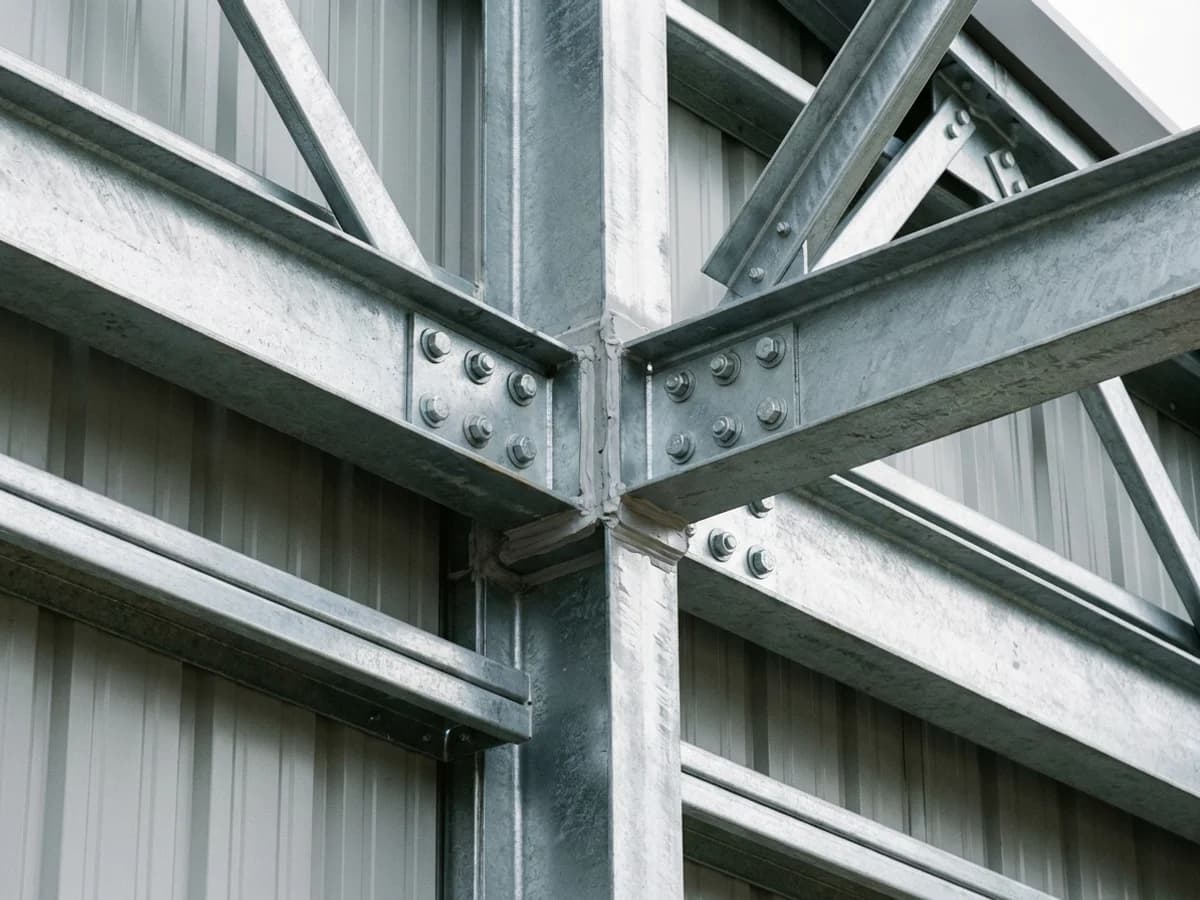
Steel construction is rated more favorably than wood framing for fire risk. The Insurance Services Office (ISO) assigns construction classes that directly affect premiums. A steel- framed barndominium may be classified as non-combustible construction, which carries lower fire risk than the frame/combustible classification applied to wood-framed homes. This difference can translate to a 5-15% premium reduction depending on the insurer.
2. Geographic Location
Your state, county, and even zip code have a major impact on insurance cost. States with high natural disaster exposure -- Florida, Texas, Louisiana, Oklahoma, and coastal Carolinas -- have significantly higher premiums. Within those states, coastal areas cost more than inland locations, and tornado-alley counties cost more than areas with lower storm frequency.
3. Replacement Cost
The higher your dwelling coverage amount, the higher your premium. A $600,000 barndominium costs more to insure than a $200,000 barndominium because the insurer's maximum exposure is greater. This is why accurately estimating replacement cost matters -- over- insuring wastes premium dollars, while under-insuring leaves you exposed to a coverage shortfall after a major loss.
4. Distance to Fire Station
Properties within 5 miles of a fire station and 1,000 feet of a fire hydrant receive the best fire protection ratings. Many barndominiums are built on rural acreage that is 10-20+ miles from the nearest fire station, which increases the fire protection class rating from ISO Class 1-3 (best) to ISO Class 8-10 (worst). A Class 10 rating can increase fire premiums by 50-100% compared to a Class 3 rating.
5. Deductible Amount
Choosing a higher deductible lowers your annual premium. Increasing from a $1,000 deductible to a $2,500 deductible typically saves 10-15% on your premium. A $5,000 deductible can save 20-25%. The trade-off is that you pay more out of pocket before insurance kicks in on a claim.
6. Claims History
Your personal claims history and the claims history on the property both affect your rate. Filing multiple small claims can increase your premium or even make you ineligible for preferred rates. Most insurance professionals recommend reserving claims for significant losses and paying minor repairs out of pocket.
7. Roof Type and Age
Steel roofing on a barndominium is generally rated favorably for impact resistance and longevity. Metal roofs with high wind and hail ratings (such as those included in Barns & Barndos builds) may qualify for roof-related discounts. Conversely, a roof that is 15-20+ years old may trigger higher premiums or inspection requirements regardless of material.
8. Security and Safety Features
Discounts are commonly available for monitored security systems (5-10% off), smoke and fire alarms (2-5%), deadbolt locks, and fire extinguishers. Lightning protection systems and automatic sprinklers can also reduce premiums, though these are less common in residential barndominiums.
Is Barndominium Insurance Cheaper Than Traditional Home Insurance?
Barndominium insurance is often slightly cheaper than traditional home insurance because steel construction qualifies for fire-resistant and wind-resistant discounts with many insurers. Steel-framed buildings are non-combustible, immune to termite damage, and resistant to rot and mold, all of which reduce the risk profile that determines insurance premiums.
The insurance cost comparison between barndominiums and traditional homes is nuanced. Steel construction provides real advantages in several risk categories, but other factors can narrow or eliminate the savings. Here is a detailed breakdown:
| Risk Category | Steel Barndominium | Wood-Framed Home | Impact on Premium |
|---|---|---|---|
| Fire Risk | Non-combustible steel frame | Combustible wood frame | 5-15% lower for steel |
| Wind Resistance | Engineered for high wind loads | Standard framing codes | 5-10% lower for engineered steel |
| Hail Damage | Metal panels may dent but rarely breach | Shingles tear; siding cracks | Slight advantage for steel |
| Termite / Pest | Steel is immune to all wood pests | Requires ongoing treatment | Lower risk profile for steel |
| Rot and Moisture | Steel does not rot; galvanized resists rust | Wood susceptible to rot and mold | Lower long-term claim risk for steel |
| Roof Longevity | Metal roof: 40-60+ year lifespan | Asphalt shingles: 15-25 years | Fewer roof replacement claims for steel |
In practice, barndominium owners report annual premium savings of $100-$500 compared to what they would pay for a wood-framed home of the same value in the same location. The savings are most significant in areas with high fire risk (rural, wildfire-prone regions) and in tornado- and hurricane-prone states where wind resistance is a major underwriting factor.
However, these savings can be offset if your barndominium is farther from a fire station than the comparison home, or if the insurer is unfamiliar with steel residential construction and does not apply the appropriate construction class discounts. This is why it is important to work with an insurer or agent who understands metal building construction and classifies your property correctly.
Barns & Barndos Insight: Our hurricane-rated steel construction is engineered to meet the specific wind load requirements of your building site. When you share your structural engineering documentation with your insurance agent, they can verify that the building meets or exceeds local wind code requirements, which can qualify you for wind mitigation credits. In Florida, for example, wind mitigation discounts can reduce premiums by 20-40% -- a significant annual savings on what is already one of the most expensive states for homeowners insurance.
What Insurance Challenges Do Barndominium Owners Face?
The most common insurance challenges for barndominium owners are finding insurers familiar with steel residential construction, getting accurate appraisals for replacement cost, obtaining coverage for mixed-use buildings (living space plus shop), and navigating classification issues where insurers categorize the property as a barn or outbuilding rather than a residence.
While barndominium insurance has become much more accessible than it was a decade ago, owners still encounter specific challenges that traditional homeowners do not face. Being aware of these issues upfront helps you address them proactively rather than discovering them when you need to file a claim.
Challenge 1: Insurer Classification
Some insurance companies still categorize barndominiums as barns, agricultural buildings, or outbuildings rather than residences. This misclassification can result in being offered a farm policy or commercial property policy instead of a standard homeowners policy, which typically provides broader coverage and is more cost-effective for residential use. The fix is straightforward: provide your insurer with documentation showing that the building is a fully finished residence -- floor plans, interior photos, permit records showing residential occupancy classification, and your certificate of occupancy.
Challenge 2: Replacement Cost Estimation
Insurance companies use replacement cost estimators that are calibrated for traditional stick-built construction. These tools may not accurately estimate the cost of replacing a steel-framed building, potentially producing a number that is too high or too low. Providing your insurer with your actual construction cost documentation, builder specifications, and a detailed inventory of materials helps them arrive at an accurate replacement cost figure.
For Barns & Barndos builds, the transparent per-square-foot pricing makes this process simple. If your 2,500 square foot barndominium was built at the Standard tier ($250/SF), you know the replacement cost starts at $625,000 -- and you can provide the full specification sheet to your insurer as documentation.
Challenge 3: Mixed-Use Coverage Gaps
Many barndominiums include a workshop, garage, or hobby area alongside the living space. If the non-residential area is substantial (more than 20-30% of total square footage), some insurers may require a special endorsement or separate policy to cover the shop portion. This is especially true if the shop is used for any business activity. Failing to disclose the mixed-use nature of your property can result in claim denial.
Challenge 4: Limited Comparable Sales for Appraisals
In some markets, there are few barndominium sales to use as comparables for appraisal purposes. This can affect both your financing and your insurance, because insurers sometimes reference market value or appraisal data when setting coverage limits. The solution is to insure based on replacement cost rather than market value, and to provide construction cost documentation as the basis for your dwelling coverage amount.
Challenge 5: Rural Location Penalties
Barndominiums are most commonly built in rural areas where fire protection ratings are lower. Even though the steel construction reduces fire risk, the distance from fire services can increase premiums. Some insurers in rural areas also have limited coverage options or charge higher rates simply because they have less actuarial data for the area. Shopping multiple insurers and working with independent agents who access multiple carriers is the most effective strategy for rural properties.
How Do You Get Insurance for a Barndominium During Construction?
During construction, you need a builder's risk insurance policy (also called course of construction insurance) that covers the structure and materials against damage from fire, wind, theft, and vandalism while the building is being erected. Builder's risk insurance typically costs 1-5% of the total construction value and is required by most construction lenders.
Construction insurance is a separate and distinct product from the homeowners insurance you will carry after the build is complete. It exists because a half-built structure faces unique risks -- exposed framing, unsecured materials on site, heavy equipment operation, and subcontractor activity -- that a standard homeowners policy is not designed to cover.
What Builder's Risk Insurance Covers
- The structure under construction at its current stage of completion
- Building materials stored on site or in transit
- Temporary structures (scaffolding, forms, fencing)
- Damage from fire, wind, hail, lightning, theft, and vandalism
- Soft costs such as architect and engineering fees if a rebuild is required
What Builder's Risk Insurance Does Not Cover
- Defective workmanship or faulty materials (this is the builder's responsibility)
- Employee injuries (covered by the builder's workers compensation policy)
- Flooding (requires a separate flood policy)
- Earthquake damage (requires a separate earthquake endorsement)
- Normal wear, weathering, or gradual deterioration
How Builder's Risk Insurance Is Priced
Builder's risk premiums are based on the total completed value of the project, not the value of work completed to date. For a $300,000 barndominium project, expect to pay $3,000-$15,000 for the builder's risk policy. The premium varies based on location, construction type, project duration, and the coverage limits selected.
| Total Project Value | Estimated Builder's Risk Premium | Typical Policy Term |
|---|---|---|
| $100,000 - $200,000 | $1,000 - $5,000 | 6 - 12 months |
| $200,000 - $400,000 | $2,000 - $10,000 | 6 - 12 months |
| $400,000 - $700,000 | $4,000 - $15,000 | 6 - 12 months |
| $700,000+ | $7,000 - $25,000+ | 6 - 12 months |
Transitioning to Homeowners Insurance
Once your barndominium is complete and you receive your certificate of occupancy, the builder's risk policy expires and you transition to a standard homeowners insurance policy. This transition should be seamless -- your insurance agent should begin the homeowners policy application during the final stages of construction so that coverage begins on the same day your builder's risk policy ends. There should never be a gap in coverage between the two policies.
If you are using a construction-to-permanent loan (the most common barndominium financing structure), your lender will require proof of homeowners insurance before the loan converts from the construction phase to the permanent mortgage phase.
What Insurance Do You Need for a Barndominium with a Shop?
A barndominium with an attached shop needs either a homeowners policy with a business endorsement or separate commercial coverage for the shop area, depending on how the shop is used. If the shop is strictly for personal hobbies, a standard homeowners policy typically covers it. If the shop is used for any commercial or income-generating activity, you need additional business coverage to avoid claim denials.
The barndominium-with-shop layout is one of the most popular configurations in steel residential construction. It combines a fully finished living area with an attached workshop, garage, or hobby space under one roof. From an insurance perspective, the key question is not whether you have a shop -- it is what you do in it.
Personal Hobby Shop: Standard Homeowners Coverage
If your shop area is used exclusively for personal hobbies -- woodworking for personal projects, vehicle maintenance on your own cars, storage of recreational equipment -- a standard homeowners policy covers it as part of the dwelling. The shop is simply another room in your home, no different from a garage or a hobby room.
However, you should ensure your personal property coverage (Coverage C) is sufficient to cover the tools, equipment, and materials stored in the shop. A well-equipped woodworking shop or automotive workshop can easily contain $20,000-$50,000 or more in tools and equipment. If your standard personal property limits are insufficient, you can increase them or add a scheduled personal property endorsement for high-value items.
Business or Income-Generating Shop: Additional Coverage Required
If you use your shop for any business activity -- even part-time or occasional work for pay -- your homeowners policy will likely exclude coverage for business-related losses. This means that if a fire destroys your shop and all your business equipment, your homeowners policy would cover the residential structure but may deny the claim for business equipment, inventory, and lost income.
For a business shop, you have two primary options:
- Home business endorsement: A rider added to your homeowners policy that extends coverage to business equipment and limited business liability. This works for small-scale, low-risk businesses and typically costs $100-$500 per year.
- Separate commercial policy: A standalone business owners policy (BOP) or commercial property policy that covers business equipment, inventory, general liability, and business income. This is appropriate for larger businesses or those with significant liability exposure. Costs vary widely based on the nature and scale of the business.
Mixed-Use Properties: Full Disclosure Is Essential
The single most important rule for insuring a barndominium with a shop is full disclosure to your insurer. Describe exactly how the shop area is used, what equipment is stored there, and whether any commercial activity occurs. Failing to disclose business use is not a harmless omission -- it is a material misrepresentation that gives the insurance company grounds to deny a claim or cancel your policy entirely.
Barns & Barndos Insight: Many of our clients build barndominiums specifically for the combination of living space and shop space under one hurricane-rated, steel-framed roof. When we design these mixed-use floor plans, we can separate the living and shop areas with fire-rated walls, dedicated electrical panels, and independent HVAC zones. This separation not only improves safety and comfort but also makes it easier for your insurer to classify and rate each portion of the building appropriately.
Important: Barns & Barndos does not build builder-grade or low-end structures. We design and build premium steel homes engineered to last a lifetime and keep your family safe. Every project features custom design, professional-grade materials, and finishes that reflect the quality of a tailored home -- not a commodity product.
Which Insurance Companies Cover Barndominiums?
Major insurance carriers that commonly cover barndominiums include State Farm, Allstate, American Family, USAA (for military families), and Farmers Insurance. Farm Bureau insurance agencies in most states are particularly experienced with barndominiums and rural steel buildings. Specialty insurers such as Foremost, American Modern, and Nationwide also offer policies tailored to non-standard dwellings.
Not every insurance company writes barndominium policies, and among those that do, the level of familiarity with steel residential construction varies significantly. Working with an insurer or agent who understands barndominiums ensures your property is classified correctly, your replacement cost is accurate, and you are receiving all available discounts for steel construction.
National Carriers
The major national insurance carriers have increasingly adapted to the growing barndominium market. State Farm, the largest homeowners insurer in the United States, writes standard homeowners policies for barndominiums in most states. Allstate, American Family, and Farmers Insurance also provide coverage, though availability and pricing vary by state and by the specific characteristics of your property. USAA is an excellent option for military families and veterans, as their underwriting team is experienced with non-traditional construction types.
Farm Bureau Insurance
State Farm Bureau agencies are often the best first call for barndominium insurance. Farm Bureau insurers operate on a state-by-state basis and have deep familiarity with rural properties, steel buildings, mixed-use structures, and agricultural operations. They understand the difference between a barn and a barndominium, and their agents can often get you the most competitive rates because they work with underwriters who regularly handle these property types. Texas Farm Bureau, Oklahoma Farm Bureau, Tennessee Farm Bureau, and Florida Farm Bureau are all strong options in their respective states.
Specialty and Non-Standard Insurers
If major carriers decline to write a standard homeowners policy on your barndominium, specialty insurers fill the gap. Foremost Insurance (a Farmers subsidiary) specializes in manufactured homes and non-standard dwellings, including barndominiums. American Modern Insurance offers dwelling fire and specialty homeowners policies for properties that mainstream carriers may not cover. These specialty policies are often slightly more expensive than standard homeowners policies, but they provide the coverage you need when standard markets are unavailable.
Independent Insurance Agents
An independent insurance agent who represents multiple carriers is the most effective resource for barndominium insurance. Unlike a captive agent who can only sell one company's products, an independent agent can shop your barndominium across five, ten, or even twenty carriers to find the best combination of coverage, price, and underwriting fit. When contacting agents, ask specifically about their experience with barndominiums or metal buildings -- an agent who has handled these properties before will know which carriers in your area are most competitive.
Tips for Getting the Best Rate
- Get at least three quotes from different carriers or through an independent agent who shops multiple markets
- Provide complete construction documentation including engineering drawings, material specifications, permit records, and photos of the finished building
- Ask about steel construction discounts for fire resistance and wind resistance -- not all agents apply these automatically
- Bundle your policies -- carrying auto, umbrella, and homeowners with the same carrier typically earns a 10-20% multi-policy discount
- Consider a higher deductible to lower your annual premium, especially if you have an emergency fund to cover smaller losses out of pocket
- Install a monitored security system for an additional 5-10% discount at most carriers
Key Takeaways: Barndominium Insurance
- Annual cost is $1,500-$3,000 for standard homeowners coverage on a typical barndominium, comparable to or slightly below traditional home insurance
- Steel construction provides real advantages -- fire resistance, wind resistance, and pest immunity can qualify you for lower insurance rates
- Insure for full replacement cost, not market value, and adjust coverage annually for construction cost inflation
- During construction, you need builder's risk insurance at 1-5% of total project value, then transition to homeowners insurance at completion
- Disclose shop or mixed-use areas fully to your insurer to avoid claim denials -- add business endorsements if any commercial activity occurs
- Work with an independent agent or Farm Bureau for the best rates and the most knowledgeable underwriting on steel residential buildings
- Quality construction documentation from your builder simplifies underwriting and helps you get accurate, competitive coverage