What Makes a Barndominium Kitchen Different?
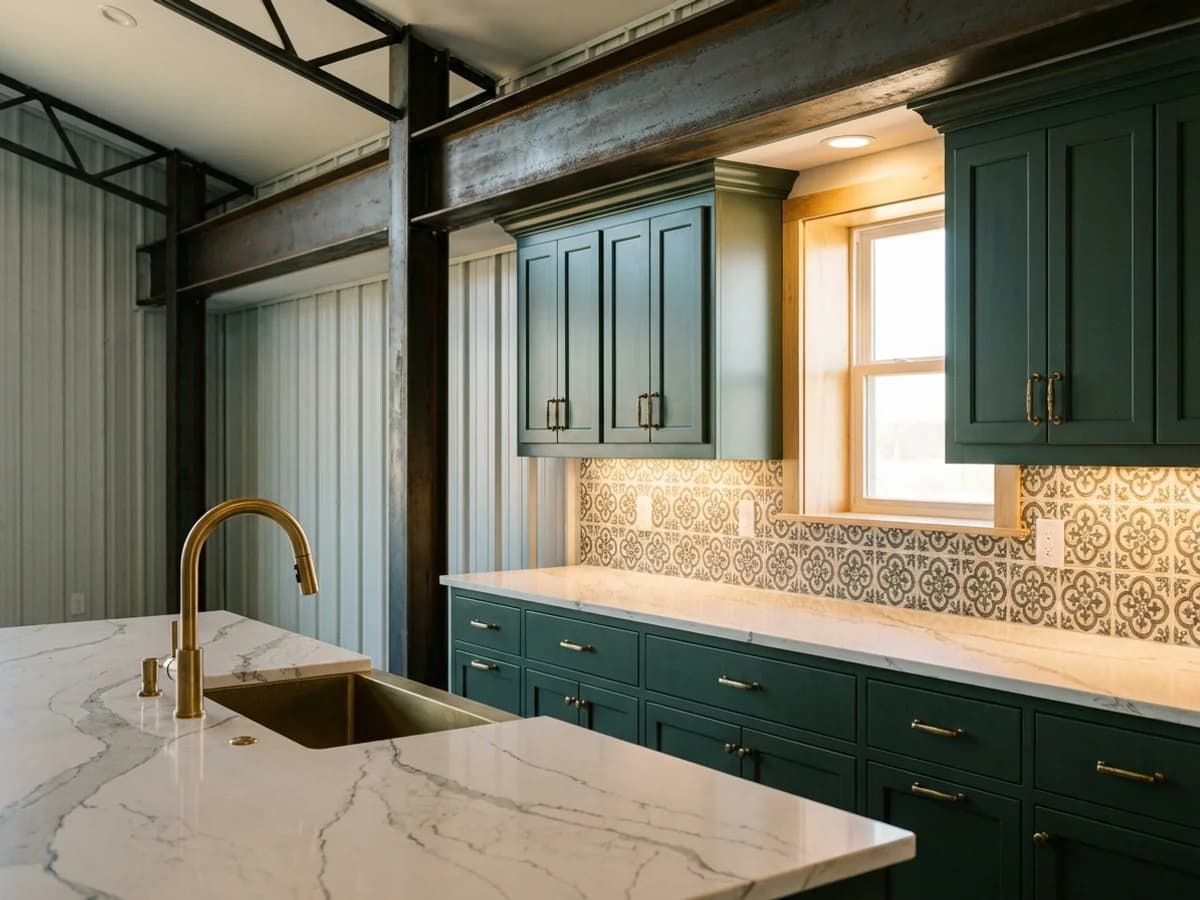
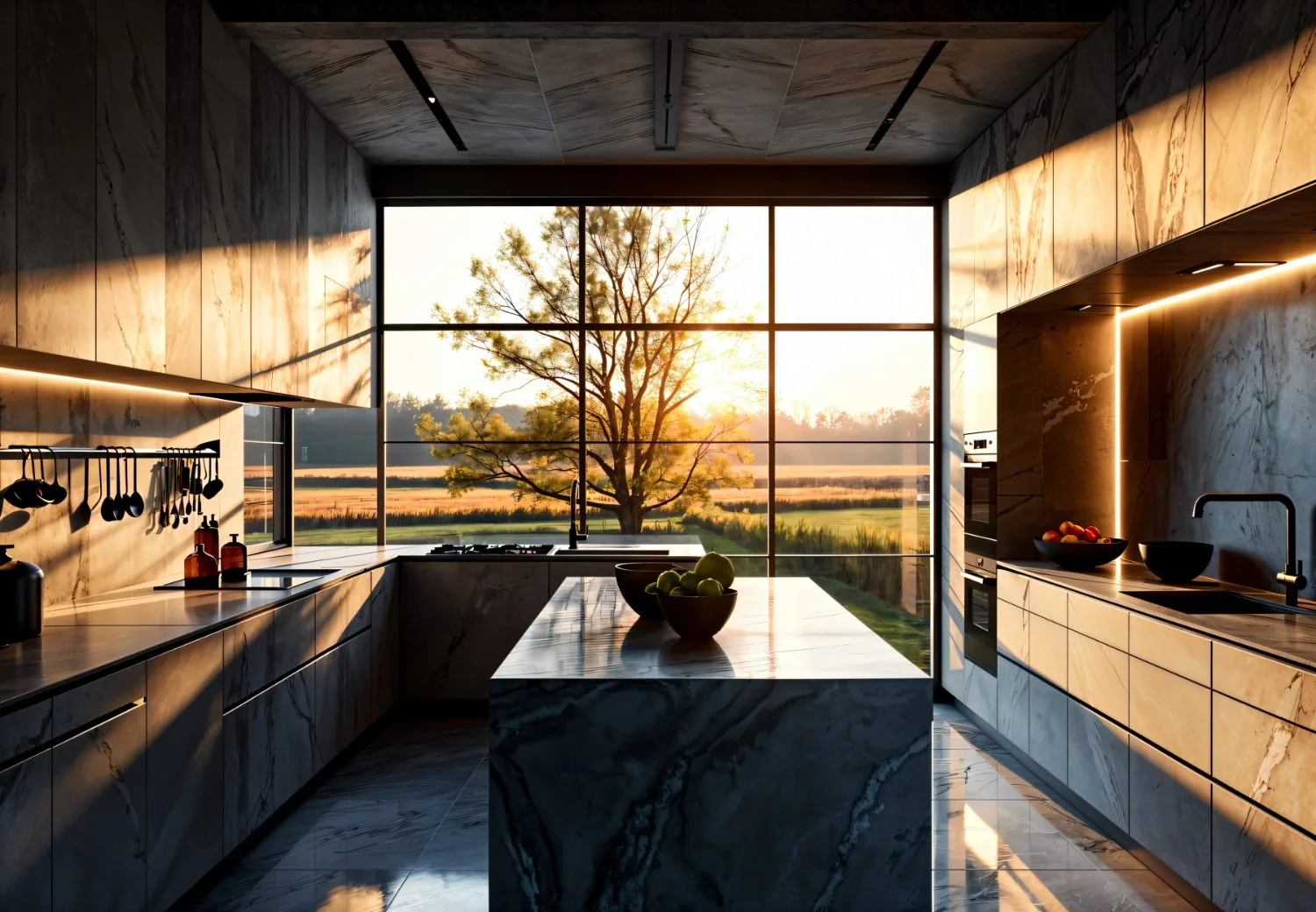
Barndominium kitchens benefit from open floor plans and high ceilings that allow for oversized islands, dramatic range hoods, open shelving up to 12+ feet, and seamless flow into living and dining areas -- all without structural column limitations.
A barndominium kitchen is not just a kitchen in a metal building. It is a kitchen designed around the unique structural advantages that steel-frame construction provides. Understanding these advantages is the first step to designing a kitchen that truly takes advantage of the building type. For a full overview of barndominium construction and how it differs from traditional building, see our complete guide to barndominiums.
In a traditional stick-built home, kitchen design is constrained by load-bearing walls, ceiling joists, and column placement. You cannot simply remove a wall to create a bigger kitchen because that wall may be holding up the roof. In a barndominium, the steel frame carries the entire structural load. Interior walls are purely for layout and privacy, which means your kitchen can be as open and expansive as your floor plan allows.
High Ceilings Create Visual Drama
Most barndominiums feature ceiling heights of 10 to 14 feet, compared to the standard 8-to-9-foot ceilings in conventional homes. In the kitchen, this extra height transforms the room. Tall upper cabinets, floor-to-ceiling open shelving, statement pendant lights, and towering range hoods become not just possible but natural design choices. The vertical space prevents even a large kitchen from feeling crowded.
Open-Concept Living Is Built In
Because there are no load-bearing interior walls, barndominium kitchens flow directly into living rooms, dining areas, and entertaining spaces without structural interruption. This open-concept layout is the default in barndominium construction rather than an expensive renovation afterthought. The kitchen island becomes the natural boundary between cooking and living zones -- a design that is both functional and social.
Flexible Utility Routing
Steel-frame barndominiums offer straightforward routing for plumbing, electrical, and HVAC through the open wall and ceiling cavities. This flexibility means you can place your kitchen anywhere in the floor plan without worrying about expensive structural modifications to accommodate drain lines, gas pipes, or ventilation ductwork.
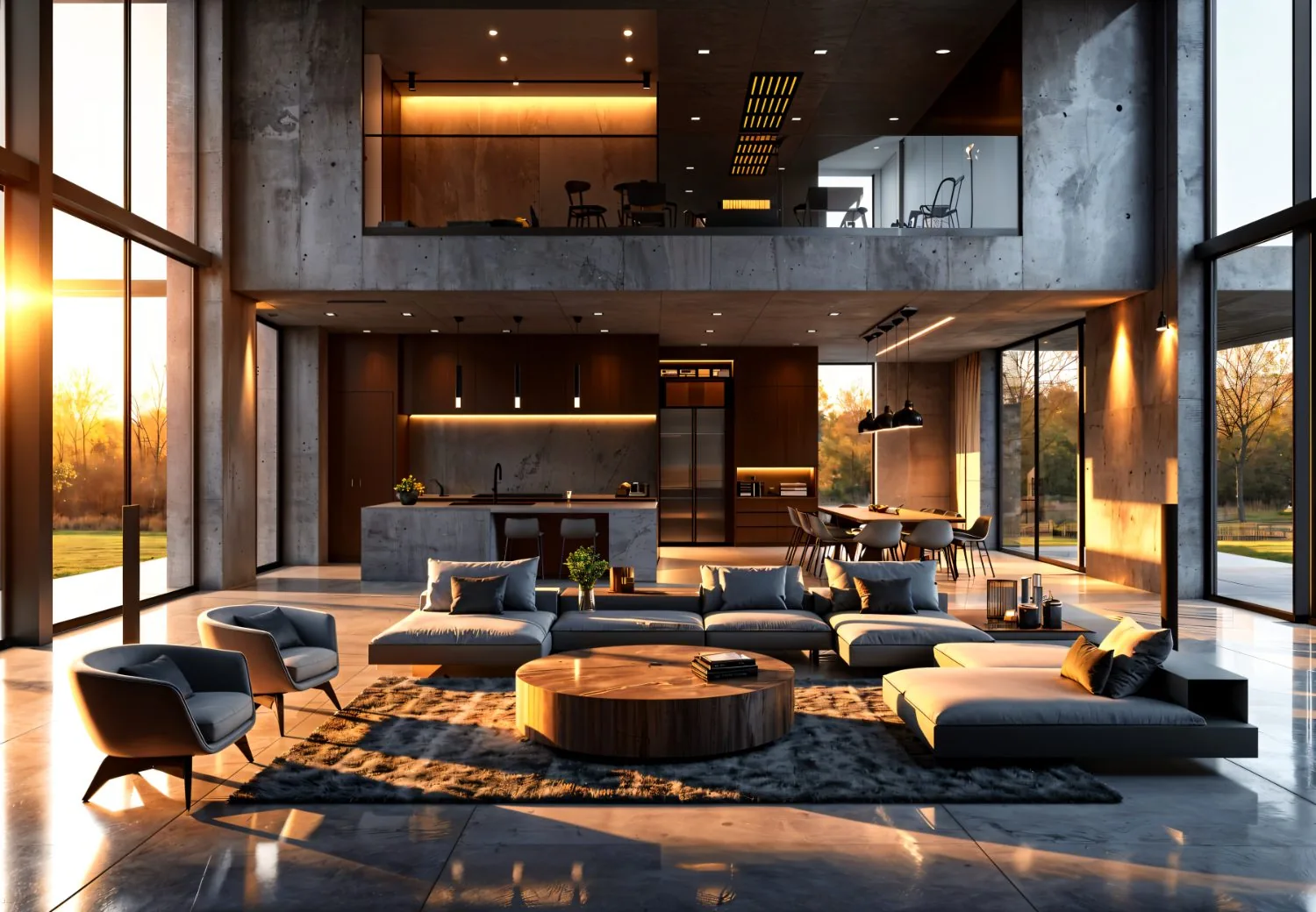
Barns & Barndos Insight: The most impactful barndominium kitchen designs lean into the building's natural strengths: high ceilings, wide-open spans, and exposed structural elements. Fighting these features to mimic a conventional kitchen wastes both money and the architectural potential of steel-frame construction. Work with the building, not against it.
What Are the Best Barndominium Kitchen Layouts?
The best barndominium kitchen layouts are the island-centric open concept, the L-shaped with island, and the U-shaped galley. Each layout leverages the open floor plan by keeping the kitchen connected to adjacent living areas while maintaining an efficient work triangle between the sink, stove, and refrigerator.
Kitchen layout determines how well your space functions on a daily basis. The right layout depends on your floor plan size, cooking habits, and how much entertaining you do. Here are the five most effective layouts for barndominium construction, ranked by popularity. For help choosing a floor plan that supports your ideal kitchen, see our barndominium floor plans guide.
| Layout | Best For | Min. Kitchen Size | Island? |
|---|---|---|---|
| Island-Centric Open | Entertaining, large families | 14 x 16 ft | Yes (centerpiece) |
| L-Shaped + Island | Most barndominium plans | 12 x 14 ft | Yes |
| U-Shaped | Serious home cooks | 10 x 12 ft | Optional |
| Galley | Small barndominiums, efficiency | 8 x 12 ft | No |
| Peninsula Open | Defining space without walls | 12 x 12 ft | Connected peninsula |
Island-Centric Open Concept
This is the most popular barndominium kitchen layout and the one that takes fullest advantage of clear-span construction. The island serves as the primary work surface, dining counter, and visual divider between kitchen and living space. Perimeter cabinets line one or two walls, while the island handles prep, cooking (if it includes a cooktop), and casual seating. This layout requires at least 14 by 16 feet of kitchen space to accommodate a proper island with 42-inch clearance on all sides.
L-Shaped with Island
The L-shaped layout places cabinets and appliances along two perpendicular walls, with a freestanding island in the open area. This is the most versatile barndominium kitchen configuration because it works in floor plans from 1,500 to 3,000+ square feet. The L-shape creates a natural work triangle, and the island adds prep space, seating, and storage without blocking traffic flow.
U-Shaped Kitchen
The U-shaped layout surrounds the cook on three sides with countertop and storage. It is the most efficient layout for meal preparation because everything is within arm's reach. In a barndominium, one leg of the U can be open to the living area (functioning like a peninsula) to maintain the open-concept feel while still providing maximum counter space.
Galley Kitchen
For smaller barndominiums under 1,200 square feet, a galley layout with two parallel runs of cabinets is space-efficient and keeps costs down. The trade-off is that galley kitchens feel enclosed. In a barndominium, you can mitigate this by leaving one end completely open to the living area and using the high ceiling to install upper cabinets or open shelving that draw the eye upward.
Peninsula Open Concept
A peninsula is essentially an island that connects to a wall or cabinet run on one end. It defines the kitchen boundary without requiring the floor space clearance of a full island. Peninsulas work well in medium-sized barndominiums where you want the openness of an island layout but the floor plan is too compact for proper island clearances.
Key Takeaways: Kitchen Layouts
- Island-centric open concept is the most popular barndominium layout -- it leverages open floor plans and creates a natural social hub
- L-shaped with island is the most versatile, working across nearly every floor plan size
- Maintain 42-48 inches of clearance around islands and peninsulas for comfortable movement and cabinet/appliance door clearance
- Plan your layout before the foundation pour -- island plumbing and appliance electrical must be embedded in or under the slab
What Kitchen Island Size Works Best in a Barndominium?
The ideal barndominium kitchen island is at least 3 feet by 5 feet for basic prep and seating. In larger floor plans (2,000+ square feet), a 4-foot by 8-foot island provides seating for four to six, a prep sink, and generous workspace. Always maintain at least 42 inches of clearance on all sides.
The kitchen island is often the single most defining feature of a barndominium kitchen. Because steel-frame construction gives you wide-open floor space, barndominium owners frequently install islands that would be impossible in conventionally framed homes. The key is sizing the island correctly for your space and needs.
| Island Size | Surface Area | Seating Capacity | Best For |
|---|---|---|---|
| 3 ft x 5 ft | 15 sq ft | 2 stools | Small barndos under 1,500 SF |
| 3 ft x 6 ft | 18 sq ft | 3 stools | Mid-size plans, 1,500-2,000 SF |
| 4 ft x 6 ft | 24 sq ft | 3-4 stools | Room for prep sink or cooktop |
| 4 ft x 8 ft | 32 sq ft | 4-6 stools | Large plans 2,000+ SF, entertaining |
| 4 ft x 10 ft+ | 40+ sq ft | 6+ stools | Grand kitchens, multi-functional |
Island Clearance Requirements
Regardless of island size, you need sufficient clearance around all four sides. The minimum is 42 inches for a walkway where no appliances face the island. If a dishwasher, oven, or refrigerator opens toward the island, increase clearance to 48 inches so you can open the appliance door and still walk behind it. For high-traffic kitchens that serve as the main pathway through the home, 48-inch clearance on the primary traffic side is strongly recommended.
Island Plumbing Considerations
Adding a prep sink or dishwasher to the island requires plumbing lines in the concrete slab. This must be planned before the foundation is poured. Drain lines, water supply lines, and potentially a vent stack need to be positioned precisely based on the island location. The added cost for island plumbing during the initial build is typically $800-$1,500 for the rough-in. Retrofitting plumbing into an existing slab costs $2,000-$5,000 because it requires cutting and patching the concrete.
Island Electrical and Features
Even if your island does not include a sink, it should have at least two electrical outlets for countertop appliances. Code requires outlets every 24 inches along the island's usable countertop edge. If you plan to install a cooktop in the island, you will need a dedicated 240-volt circuit (for electric) or a gas line run through the slab. Pendant lights above the island also require ceiling junction boxes positioned to align with the island center.
Barns & Barndos Insight: We design island plumbing and electrical into every barndominium floor plan before the foundation pour. Changing your mind about island placement after concrete is down is one of the most expensive mid-build changes you can make. Finalize your kitchen layout during the design phase, not during construction.
What Countertop Materials Work Best in a Barndominium?
The best countertop materials for a barndominium kitchen are quartz ($50-$100 per square foot installed), granite ($40-$80 per square foot), butcher block ($40-$70 per square foot), concrete ($65-$135 per square foot), and stainless steel ($80-$150 per square foot). Quartz is the most popular choice due to its durability, zero-maintenance surface, and wide range of colors and patterns.
Countertop material is one of the most visible design choices in any kitchen, and it has a major impact on both aesthetics and long-term maintenance. In a barndominium, countertop selection also needs to complement the building's character -- whether you are going for modern farmhouse warmth, industrial edge, or clean contemporary lines.
| Material | Cost (Installed/SF) | Durability | Maintenance | Best Style Match |
|---|---|---|---|---|
| Quartz | $50 - $100 | Excellent | None (non-porous) | Modern, transitional |
| Granite | $40 - $80 | Excellent | Annual sealing | Traditional, rustic |
| Butcher Block | $40 - $70 | Good (scratches) | Regular oiling | Farmhouse, rustic |
| Concrete | $65 - $135 | Excellent | Periodic sealing | Industrial, modern |
| Stainless Steel | $80 - $150 | Excellent | Fingerprint wiping | Industrial, commercial |
| Laminate | $10 - $30 | Fair | None | Budget builds |
Quartz: The Most Popular Choice
Engineered quartz dominates barndominium kitchen design for good reason. It is non-porous (no sealing required), resistant to staining and scratching, and available in hundreds of colors and patterns, including convincing marble and concrete looks. For a typical barndominium kitchen with 40-60 square feet of countertop surface, quartz costs $2,000-$6,000 installed. The Barns & Barndos High End tier includes quartz countertops as a standard selection.
Granite: Classic and Cost-Effective
Natural granite remains a strong choice, especially for barndominium kitchens with a traditional or rustic design direction. Granite offers unique patterns since every slab is different, excellent heat resistance, and strong resale value. The trade-off is that granite requires annual sealing to prevent staining. At $40-$80 per square foot installed, it is often the best value for a high-end look.
Butcher Block: Warmth and Texture
Butcher block countertops add warmth and natural texture that contrasts beautifully with metal wall accents or exposed steel beams. Walnut, maple, and white oak are the most popular species. Butcher block requires regular oiling and is susceptible to water damage around sinks, so many barndominium owners use it on the island or a secondary counter while installing quartz or granite around the sink and stove areas.
Concrete and Stainless Steel: Industrial Edge
For barndominiums that embrace their steel-building heritage with an industrial or modern aesthetic, concrete and stainless steel countertops are distinctive choices. Concrete can be cast in any shape and tinted to any color, but it is heavy and requires periodic sealing. Stainless steel is virtually indestructible and hygienic, but it shows fingerprints and scratches. Both materials pair naturally with the metal elements already present in barndominium construction.
Barns & Barndos Insight: Mixing countertop materials is one of the most effective design moves in a barndominium kitchen. Quartz on the perimeter counters for durability, butcher block on the island for warmth, and the same material on the island overhang as the breakfast bar surface. This approach adds visual interest without significantly increasing cost.
What Cabinet Styles Suit a Barndominium?
The most popular barndominium cabinet styles are shaker (clean lines that work with any design direction), flat-panel modern (sleek, contemporary), rustic wood (knotty alder or reclaimed), two-tone combinations (contrasting upper and lower cabinets), and open shelving mixed with closed storage. High ceilings allow for 42-inch upper cabinets or stacked configurations that are not possible in standard-height homes.
Cabinetry is the largest visual element in any kitchen, and in a barndominium with high ceilings, cabinets have even more impact. The right cabinet style sets the design tone for the entire open-concept living area since the kitchen is fully visible from the living and dining spaces. For more on coordinating your kitchen with the rest of your barndominium, see our barndominium interior design guide.
Shaker Cabinets
Shaker-style cabinets feature a five-piece door with a recessed center panel. They are the most versatile option because they look equally at home in farmhouse, transitional, and modern barndominium designs. Painted shaker cabinets in white, gray, or navy are the most common choice. Stained shaker doors in natural wood tones work well in rustic and traditional designs. Expect to pay $150-$350 per linear foot for semi-custom shaker cabinetry.
Flat-Panel Modern
Slab or flat-panel doors deliver a clean, contemporary look that pairs well with industrial and modern barndominium interiors. These cabinets have no frame or panel detail -- just a smooth, flat surface. They are available in high-gloss lacquer, matte finishes, and wood-grain laminates. Flat-panel cabinets often feature integrated handles or push-to-open hardware for a seamless appearance. Pricing is similar to shaker at $150-$350 per linear foot.
Rustic and Reclaimed Wood
Knotty alder, hickory, and reclaimed wood cabinets bring organic warmth to a barndominium kitchen. The natural wood grain, knots, and character marks contrast with the steel-frame structure to create the classic “barn meets home” aesthetic. These cabinets are typically stained rather than painted, and they pair exceptionally well with butcher block countertops and wrought iron hardware. Expect to pay $200-$450 per linear foot for custom wood cabinetry.
Two-Tone Combinations
Two-tone cabinetry uses one color or material for upper cabinets and a different selection for lowers (or for the island versus perimeter). Popular combinations include white uppers with navy or charcoal lowers, painted perimeter cabinets with a natural wood island, and light gray uppers with dark stained lowers. Two-tone designs add visual depth to large barndominium kitchens without requiring additional decorative elements.
Open Shelving Combinations
Replacing some or all upper cabinets with open shelving is a popular barndominium kitchen trend. Open shelves on either side of a range hood showcase dishes, cookbooks, and decorative items while keeping the kitchen feeling airy. In barndominiums with 12-to-14-foot ceilings, open shelving can extend much higher than in a conventional home, creating a dramatic display wall. The practical consideration is that open shelves require regular dusting and organized styling.
Key Takeaways: Cabinets
- Shaker cabinets are the safest and most versatile choice for any barndominium style
- Take advantage of high ceilings with 42-inch uppers, stacked cabinets, or floor-to-ceiling open shelving
- Two-tone combinations add visual interest in large, open kitchens without increasing cost significantly
- Budget $150-$450 per linear foot for semi-custom to custom cabinetry; stock cabinets run $75-$150 per linear foot
How Do You Handle Barndominium Kitchen Lighting?
Barndominium kitchen lighting requires a layered approach: pendant lights over the island for task and ambient light, recessed cans for general illumination, under-cabinet LED strips for counter task lighting, and natural light through strategically placed windows. High ceilings (10-14 feet) require higher-lumen fixtures and longer pendant drop lengths than standard kitchens.
Lighting in a barndominium kitchen is more complex than in a standard home because of the ceiling height. A fixture that works perfectly at 8 feet will look lost and under-power a room at 12 feet. The solution is a layered lighting plan that combines multiple fixture types at different heights to create a well-lit, visually balanced kitchen.
Pendant Lights Over the Island
Pendant lights are the signature lighting element in a barndominium kitchen. They hang from the high ceiling to bring focused light down to island level while serving as a design statement. The bottom of the pendant should hang 30-36 inches above the island countertop, regardless of ceiling height. For a 4-foot by 8-foot island, plan for three pendants spaced 24-30 inches apart. Choose fixtures with enough visual weight to fill the vertical space -- delicate pendants that work at 8-foot ceilings will look undersized below a 12-foot ceiling.
Recessed Can Lighting
Recessed lights provide even, general illumination across the entire kitchen. In a barndominium with a flat ceiling, space 6-inch recessed cans every 4-5 feet in a grid pattern. For vaulted or sloped ceilings, use adjustable-gimbal recessed fixtures that can be aimed at work surfaces. Install recessed lights on a separate circuit from pendants so you can control ambient and task lighting independently. Budget $75-$150 per recessed fixture installed.
Under-Cabinet LED Strips
Under-cabinet lighting is essential for countertop task areas. LED strips mounted beneath upper cabinets eliminate shadows cast by your body when standing at the counter. Warm white (2,700-3,000K) LEDs are the most flattering color temperature for kitchens. Under-cabinet LED kits cost $100-$400 for a full kitchen installation. If you are using open shelving instead of upper cabinets, consider recessed puck lights or LED strips mounted to the underside of the shelves.
Natural Light Strategies
Steel-frame construction makes it easy to place large windows in the kitchen since the walls are not load-bearing. A window above the sink is traditional, but in a barndominium you can go further: floor-to-ceiling windows adjacent to the kitchen area, clerestory windows near the roofline for high natural light, or even a skylight above the island. South-facing windows provide the most consistent natural light throughout the day. Each window adds $300-$1,200 depending on size and glass type.
Statement Lighting
In barndominiums with ceilings above 12 feet, a statement chandelier or oversized pendant grouping above the island or dining area adjacent to the kitchen becomes a focal point. Iron chandeliers, wagon wheel fixtures, and industrial multi-bulb pendants are popular barndominium choices. Budget $500-$3,000 for a quality statement fixture, or $3,000-$8,000 for a custom or designer piece.
Barns & Barndos Insight: We always recommend installing dimmer switches on kitchen pendant and recessed circuits. A barndominium kitchen that is brightly lit for cooking at 6 PM needs to transition to warm, low ambient light for entertaining at 8 PM. Dimmers cost less than $30 per switch and make a dramatic difference in how the kitchen feels throughout the day.
What Kitchen Appliances Come with Barns & Barndos Finish Packages?
All three Barns & Barndos finish tiers include a complete kitchen appliance package: refrigerator, range or cooktop and wall oven, dishwasher, microwave, and range hood. The Standard tier ($250/SF) includes quality name-brand appliances, the High End tier ($275/SF) upgrades to premium brands, and the Luxury tier ($300/SF) features professional-grade or designer appliance suites.
One of the advantages of a turnkey barndominium build is that your kitchen appliances are included in the package price -- no separate appliance shopping, no worrying about compatibility, and no delivery coordination. Barns & Barndos includes a complete kitchen appliance suite in every finish package, with the specific brands and models scaling with each tier.
| Feature | Standard ($250/SF) | High End ($275/SF) | Luxury ($300/SF) |
|---|---|---|---|
| Refrigerator | French door, name brand | Counter-depth French door | Built-in or panel-ready |
| Range/Cooktop | Slide-in range, gas or electric | Premium slide-in, dual fuel option | Pro-style range or separate cooktop + wall oven |
| Dishwasher | Standard integrated | Quiet-rated, 3rd rack | Panel-ready, ultra-quiet |
| Range Hood | Stainless under-cabinet | Chimney-style, 600+ CFM | Statement hood or custom vent |
| Microwave | Over-the-range | Built-in or drawer style | Built-in with convection |
| Countertops | Solid surface | Quartz | Premium natural stone or designer quartz |
| Cabinetry | Painted shaker, soft-close | Custom-stained, dovetail drawers | Custom millwork, specialty finishes |
Energy Efficiency Across Tiers
All appliances included in Barns & Barndos packages are ENERGY STAR certified. This is not just an environmental consideration -- it directly impacts your monthly utility costs. An ENERGY STAR refrigerator uses approximately 15% less energy than non-certified models, and an efficient dishwasher uses less than 4 gallons of water per cycle versus 6+ gallons for older models. Over the life of the appliance, these efficiencies save hundreds of dollars per year.
Upgrade and Substitution Options
You are not locked into the default appliance selections within each tier. Barns & Barndos works with you to substitute or upgrade specific appliances based on your cooking preferences. Want a professional 48-inch range in a High End package? The team can accommodate that with a line-item upgrade. Prefer an induction cooktop over gas? That is a straightforward swap. The tier pricing provides a baseline, and targeted upgrades let you customize without moving to a higher tier for everything.
For full details on what each finish tier includes beyond the kitchen, visit our finish packages page. The kitchen is typically the highest-impact room in any finish package, so understanding the tier differences here helps you choose the right level for your entire build.
How Much Does a Barndominium Kitchen Cost?
A barndominium kitchen costs between $8,000 and $60,000+ depending on the level of finishes, appliances, and customization. Budget kitchens run $8,000-$15,000, mid-range kitchens cost $15,000-$30,000, and luxury gourmet kitchens with premium appliances and custom cabinetry range from $30,000 to $60,000 or more.
The kitchen is typically the most expensive single room in a barndominium, often accounting for 15-20% of the total interior finishing budget. Understanding where that money goes helps you allocate your dollars to the elements that matter most to your daily life. For a complete overview of how kitchen costs fit into the total project budget, see our barndominium guide.
| Component | Budget ($8K-$15K) | Mid-Range ($15K-$30K) | Luxury ($30K-$60K+) |
|---|---|---|---|
| Cabinets | $2,500 - $5,000 | $5,000 - $12,000 | $12,000 - $25,000 |
| Countertops | $800 - $2,000 | $2,000 - $5,000 | $5,000 - $10,000 |
| Appliances | $2,000 - $4,000 | $4,000 - $8,000 | $8,000 - $20,000+ |
| Flooring | $500 - $1,500 | $1,500 - $3,000 | $3,000 - $6,000 |
| Lighting | $300 - $800 | $800 - $2,000 | $2,000 - $5,000 |
| Plumbing (Fixtures) | $400 - $1,000 | $1,000 - $2,500 | $2,500 - $5,000 |
| Backsplash | $300 - $800 | $800 - $2,500 | $2,500 - $6,000 |
| Installation Labor | $1,200 - $3,000 | $3,000 - $6,000 | $6,000 - $10,000 |
Budget Kitchen: $8,000-$15,000
A budget barndominium kitchen uses stock cabinets from a home center, laminate countertops, basic stainless steel appliances, and vinyl plank flooring. This level of kitchen is functional and clean but lacks the custom feel of higher tiers. It is appropriate for starter barndominiums, rental properties, or builds where the kitchen budget needs to stay minimal. Even at this level, barndominium kitchens benefit from the open floor plan and high ceilings that make the space feel larger than the budget suggests.
Mid-Range Kitchen: $15,000-$30,000
The mid-range barndominium kitchen is where most owners land. Semi-custom shaker or flat-panel cabinets, granite or quartz countertops, a subway tile or patterned backsplash, upgraded appliances with a French-door refrigerator and slide-in range, and pendant lights over the island. This kitchen looks and functions like a quality custom home kitchen. The Barns & Barndos Standard finish tier ($250/SF) delivers a kitchen at or above this level.
Luxury Kitchen: $30,000-$60,000+
A luxury barndominium kitchen features custom cabinetry with specialty finishes, premium quartz or natural stone countertops, a professional-grade appliance suite (48-inch range, built-in refrigerator, panel-ready dishwasher), a statement range hood, designer lighting, and high-end plumbing fixtures. At this level, the barndominium kitchen competes with any custom home kitchen in the market. The Barns & Barndos High End ($275/SF) and Luxury ($300/SF) tiers include kitchens at this caliber.
Barns & Barndos Insight: The kitchen is where your dollars make the biggest daily impact. You cook, eat, socialize, and gather in this room more than any other. Our recommendation is to allocate the largest portion of your interior finishing budget to the kitchen and master bathroom -- these two rooms drive both daily satisfaction and long-term resale value. Every Barns & Barndos tier front-loads the kitchen to deliver the best possible experience at each price point.
Important: Barns & Barndos does not build builder-grade or low-end structures. We design and build premium steel homes engineered to last a lifetime and keep your family safe. Every project features custom design, professional-grade materials, and finishes that reflect the quality of a tailored home -- not a commodity product.
Key Takeaways: Barndominium Kitchen Design
- Steel-frame construction is your advantage -- open spans, high ceilings, and no load-bearing walls enable kitchen designs impossible in traditional homes
- Kitchen costs range from $8,000 to $60,000+ depending on cabinets, countertops, appliances, and level of customization
- Island sizing starts at 3x5 feet minimum with 42-inch clearance on all sides; 4x8 feet is ideal for larger barndominium plans
- Quartz countertops ($50-$100/SF) are the most popular choice for durability, aesthetics, and zero maintenance
- Plan plumbing and electrical before the slab pour -- island sinks, cooktops, and outlet locations must be embedded in the foundation
- All Barns & Barndos tiers include a complete kitchen -- appliances, cabinetry, countertops, fixtures, and lighting are included in the per-square-foot price
- Layered lighting is essential -- combine pendant, recessed, and under-cabinet fixtures to properly illuminate high-ceiling kitchens