What Makes a Great Barndominium Floor Plan?
The best barndominium floor plans maximize the open-span capability of steel framing, eliminating load-bearing interior walls to create flexible, customizable living spaces that can be reconfigured over time without structural changes.
If you are exploring barndominium living for the first time, our complete guide to barndominiums covers everything from construction methods to financing. This floor plan guide focuses on the layout decisions that determine how your barndominium actually feels to live in every day -- room placement, traffic flow, ceiling height, and the relationship between living spaces and utility areas like shops and garages.
A great barndominium floor plan is not just a collection of rooms. It is a system that balances four priorities: daily livability, long-term flexibility, construction efficiency, and budget alignment. The best plans achieve all four without sacrificing any one for the others.
Open-Span Freedom
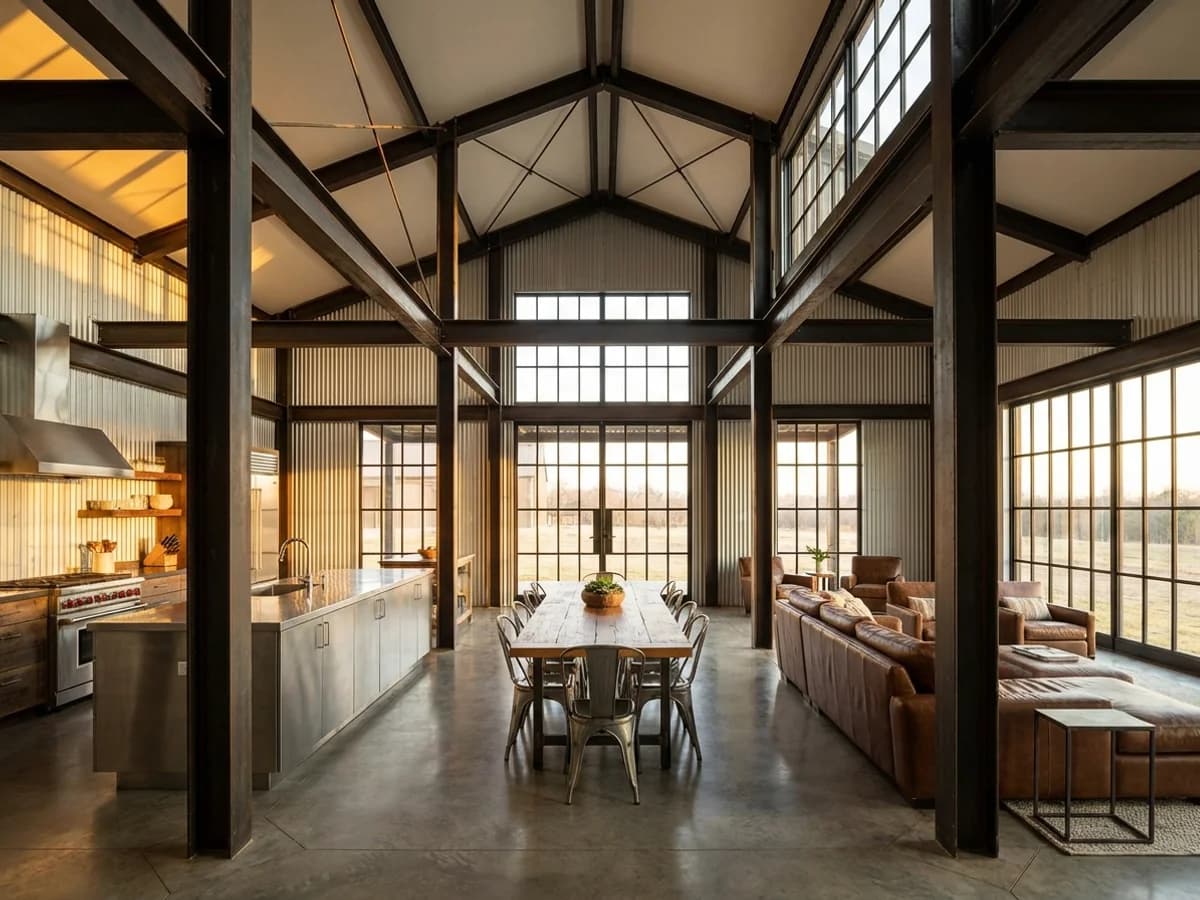
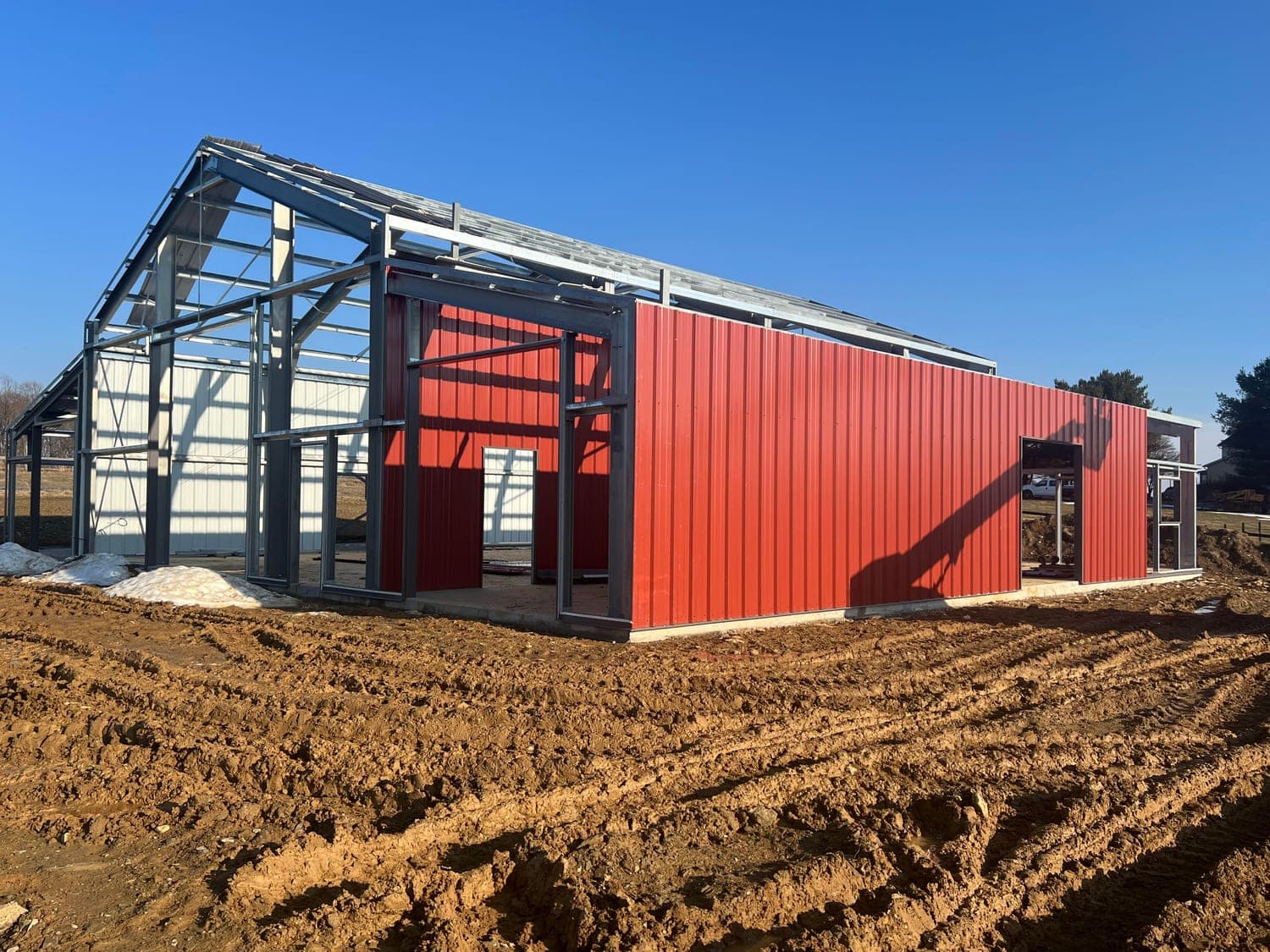
Steel framing is the single biggest advantage barndominiums have over traditional homes when it comes to floor plan design. A steel building can clear-span 80 feet or more without a single interior column or load-bearing wall. That means every interior wall in your barndominium is a partition wall -- it defines space but carries no structural load. You can place walls wherever you want, remove them later, or leave them out entirely for a wide-open loft-style living experience.
In a traditional stick-built home, load-bearing walls dictate where rooms can go. Want to open up the kitchen to the living room? You need an engineered header beam that can cost $2,000-$5,000 and limits the span width. In a barndominium, you simply do not frame that wall. The ceiling stays up regardless.
Traffic Flow and Zoning
The best barndominium layouts create clear zones: public spaces (living room, kitchen, dining) in one area, private spaces (bedrooms, bathrooms) in another, and utility spaces (shop, garage, laundry, mudroom) as a buffer or transition between the two. This zoning approach reduces noise transfer, creates natural traffic paths, and keeps guests out of your private areas without needing long hallways that waste square footage.
Ceiling Height Matters
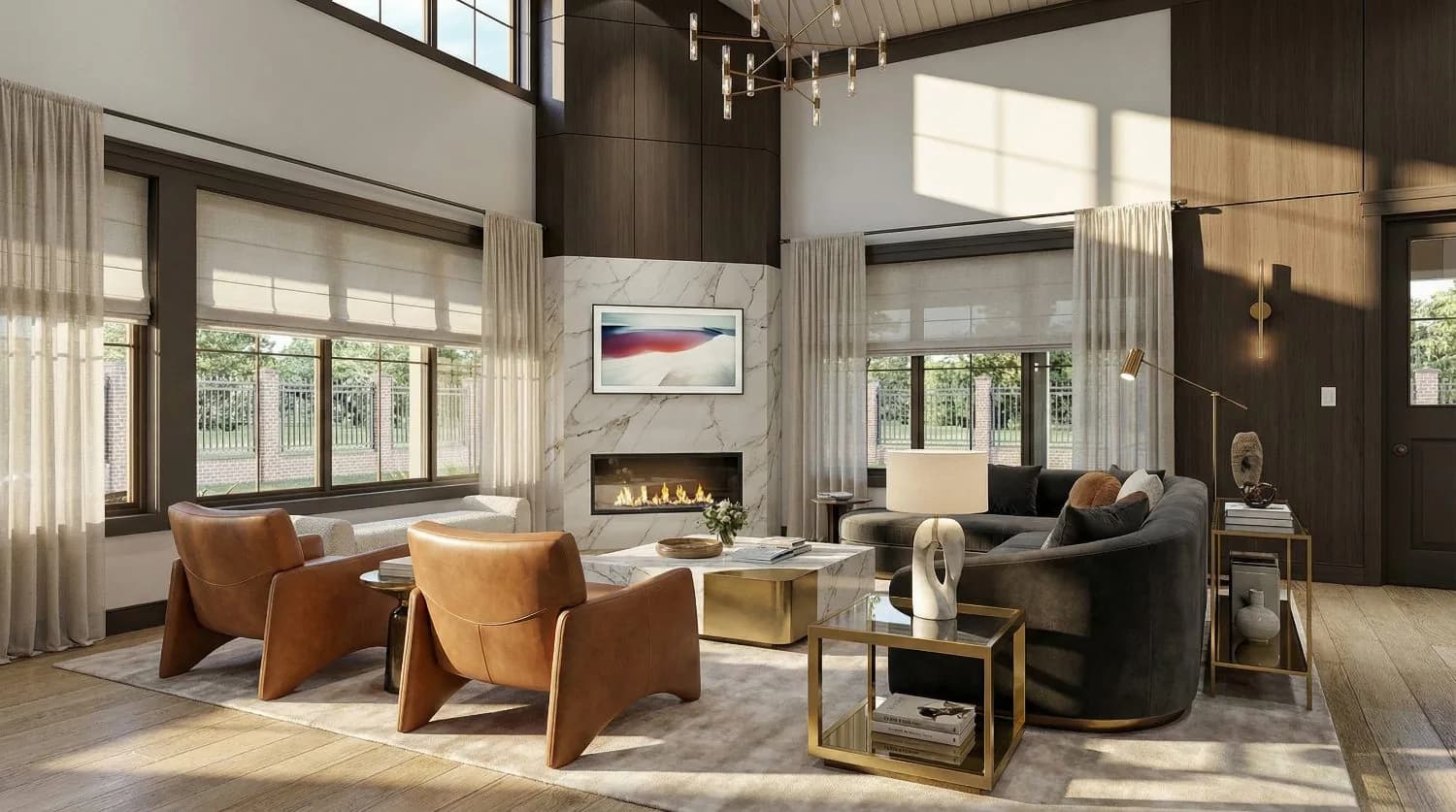
Most barndominium steel frames accommodate ceiling heights of 10 to 16 feet at the ridge, depending on the building width and roof pitch. Taller ceilings make open-concept living areas feel dramatically more spacious. Many barndominium owners use vaulted or exposed-truss ceilings in the main living area while dropping to standard 9-foot ceilings in bedrooms and bathrooms for a more intimate feel.
Key Takeaways: What Makes a Great Floor Plan
- Steel clear-span framing means zero load-bearing interior walls -- place rooms wherever you want
- Zone your layout into public (living), private (bedrooms), and utility (shop/garage) areas for the best daily flow
- Use ceiling height strategically -- vaulted in the main living area, standard in bedrooms
- Plan for flexibility -- a great floor plan works today and adapts as your needs change
What Are the Most Popular Barndominium Sizes?
The most popular barndominium sizes range from 30x40 (1,200 SF) for small builds to 60x100 (6,000 SF) for large estates, with the 40x60 (2,400 SF) being the single most common size chosen by families building their primary residence. Each size accommodates different bedroom counts, lifestyle needs, and budget ranges.
Barndominium dimensions follow standard steel building widths, which are engineered in increments that optimize material efficiency. The most cost-effective sizes use these standard widths because they minimize material waste and simplify engineering. Here is a breakdown of the most popular barndominium sizes and what each one supports:
| Dimensions | Square Feet | Bedrooms | Best For | Estimated Cost Range |
|---|---|---|---|---|
| 30x30 | 900 SF | 1 | Single person, couple, ADU, guest house | $180K - $270K |
| 30x40 | 1,200 SF | 1-2 | Starter home, downsizer, vacation property | $240K - $360K |
| 30x50 | 1,500 SF | 2-3 | Small family, couple with home office | $300K - $450K |
| 40x60 | 2,400 SF | 3-4 | Family primary residence, most popular size | $480K - $720K |
| 40x80 | 3,200 SF | 3-5 | Large family, home + shop combo | $640K - $960K |
| 60x80 | 4,800 SF | 4-6 | Estate home, multi-generational, large shop | $960K - $1.44M |
| 60x100 | 6,000 SF | 5-7 | Luxury estate, commercial + residential combo | $1.2M - $1.8M |
The cost ranges shown above reflect $200-$300 per square foot spanning national averages through premium turnkey finishes. Premium turnkey builds from Barns & Barndos start at $250 per square foot with their Standard finish tier. For a detailed breakdown of what drives these costs, see our complete barndominium guide.
Barns & Barndos Insight: If you are torn between two sizes, build the larger shell but finish only the space you need now. A 40x60 shell costs only marginally more than a 40x50, but it gives you 400 extra square feet of covered space that you can finish as a bedroom, shop, or bonus room later. We design expandable floor plans with this phased approach in mind.
What Are the Best Small Barndominium Floor Plans (Under 1,500 SF)?
The best small barndominium floor plans under 1,500 square feet use open-concept living-kitchen-dining areas, limit hallways to maximize usable space, and typically feature 1-2 bedrooms with 1-2 bathrooms. The most popular small barndominium sizes are the 30x40 (1,200 SF) and the 30x50 (1,500 SF).
Small barndominiums are ideal for couples, single-person households, vacation properties, accessory dwelling units, and retirees looking to downsize without sacrificing quality. The key to making a small barndominium feel spacious is eliminating wasted space -- every square foot needs to earn its place.
30x40 Layout (1,200 SF): The Efficient Starter
A 30x40 barndominium delivers 1,200 square feet of living space, which is enough for a comfortable 2-bedroom, 1-bathroom home with an open-concept main living area. The most efficient layout places the bedrooms on one end of the building and the kitchen, living, and dining space on the other. A single bathroom between the two bedrooms serves double duty as both a guest bath and a secondary access point from the hallway.
A typical 30x40 floor plan includes:
- Open-concept living, dining, and kitchen area (approximately 500 SF)
- Primary bedroom with closet (approximately 200 SF)
- Secondary bedroom or home office (approximately 150 SF)
- Full bathroom (approximately 60 SF)
- Laundry closet and utility space (approximately 40 SF)
- Covered front porch (optional, adds exterior SF)
At this size, every design decision matters. Using a galley-style or L-shaped kitchen keeps the cooking zone compact while leaving the living area open. Pocket doors instead of swing doors save 10-15 square feet of usable floor space across the home. Built-in storage in hallways and bedrooms eliminates the need for large closets that consume precious square footage.
30x50 Layout (1,500 SF): The Smart Mid-Point
Adding 10 feet of depth transforms the layout options significantly. A 30x50 barndominium at 1,500 square feet comfortably accommodates 2-3 bedrooms, 2 bathrooms, and a more generous living area. The extra 300 square feet typically goes toward a second full bathroom (an en-suite master bath), a larger kitchen with an island, or a dedicated mudroom and laundry room.
The most popular 30x50 configurations include:
- 2-bed / 2-bath with large living: Ideal for couples who want a spacious primary suite with a walk-in closet and a generous open-concept main area
- 3-bed / 2-bath family layout: Two kids' bedrooms sharing a bath on one end, primary suite on the other, open living in the center
- 2-bed / 1-bath with attached single-car garage: Dedicates about 350 SF to a garage bay accessible through a mudroom, leaving 1,150 SF of living space
For a deeper dive into 30x50 barndominium layouts with detailed room-by-room configurations, see our upcoming 30x50 barndominium guide.
Small Barndominium Design Tips
- Eliminate hallways where possible -- rooms that open directly to the main living area save 50-100 SF
- Use vaulted ceilings in the main living area to make 1,200 SF feel like 1,600 SF
- Pocket doors and barn-style sliding doors save floor space in tight areas
- A kitchen island can double as a dining table in compact layouts, eliminating the need for a separate dining room
- Plan for storage -- small homes need creative built-in solutions like under-stair closets, wall niches, and overhead loft storage
What Are the Best Mid-Size Barndominium Floor Plans (1,500-2,500 SF)?
Mid-size barndominium floor plans between 1,500 and 2,500 square feet are the most popular segment for primary residences, offering 2-4 bedrooms, 2-3 bathrooms, and enough space for open-concept living with optional dedicated rooms like home offices, mudrooms, and pantries. The 40x60 (2,400 SF) is the most commonly built barndominium size in this range.
This is the sweet spot for most families. You have enough square footage for comfortable daily living, dedicated bedrooms for children, a primary suite with a real en-suite bathroom, and an open-concept main area that does not feel cramped. You also have room for the features that separate a house from a home: a walk-in pantry, a mudroom with bench seating and coat hooks, a laundry room (not just a closet), and possibly a small home office.
40x50 Layout (2,000 SF): The Balanced Family Home
A 40x50 barndominium at 2,000 square feet is the stepping stone between small and spacious. The 40-foot width is a critical upgrade from 30-foot buildings because it allows rooms on both sides of a central hallway or living area. This eliminates the “bowling alley” feel that can plague narrower buildings.
The most popular 40x50 floor plan places:
- An open-concept kitchen, living, and dining area spanning the full 40-foot width at one end (approximately 700 SF)
- A primary bedroom suite with walk-in closet and en-suite bath in one rear corner (approximately 350 SF)
- Two secondary bedrooms sharing a full bath in the opposite rear corner (approximately 400 SF)
- A central hallway, laundry room, and utility closet connecting the zones (approximately 200 SF)
- A covered porch across the front or back (additional exterior SF)
40x60 Layout (2,400 SF): The Most Popular Barndominium
The 40x60 barndominium is the single most requested size in the industry, and for good reason. At 2,400 square feet, it provides enough space for 3-4 bedrooms, 2-3 bathrooms, a generous open-concept living area, and either a dedicated office, a formal dining room, or a small attached shop -- pick one or two depending on how you prioritize the space.
Common 40x60 floor plan configurations include:
- 3-bed / 2-bath with bonus room: The classic layout with a primary suite on one end, two bedrooms on the other, open living in the center, and a flex room that works as a home office, playroom, or fourth bedroom
- 3-bed / 2.5-bath with small shop: Allocates approximately 600 SF to a small shop or oversized garage bay with direct exterior access, leaving 1,800 SF of living space
- 4-bed / 2-bath family layout: Maximizes bedrooms for larger families, with two bedrooms on each side of the home and the open living area in the center
For complete 40x60 floor plan options with room dimensions, furniture placement ideas, and cost breakdowns, see our dedicated 40x60 barndominium guide.
Barns & Barndos Insight: The 40x60 is our most-requested size because it hits the efficiency sweet spot. The 40-foot clear span is structurally efficient (keeping steel costs reasonable), while 60 feet of depth provides enough room for a genuine 3-4 bedroom home. At our Standard tier pricing of $250/SF, a 40x60 barndominium comes to $600,000 fully finished -- competitive with new construction in most markets and delivered with galvanized steel framing and our 50-year PVDF warranty.
What Are the Best Large Barndominium Floor Plans (2,500+ SF)?
Large barndominium floor plans above 2,500 square feet accommodate 3-5+ bedrooms, 3-4 bathrooms, dedicated home offices, formal dining rooms, oversized kitchens, and attached shops or multi-car garages. Popular sizes include 40x80 (3,200 SF), 60x80 (4,800 SF), and 60x100 (6,000 SF).
At this scale, barndominium floor plans start to rival -- and often exceed -- the functionality of high-end custom homes. The open-span capability of steel framing really shines in larger buildings, where you can create great room-style living areas of 800-1,200 square feet with cathedral ceilings, all without a single support column interrupting the space.
40x80 Layout (3,200 SF): The Large Family Home
A 40x80 barndominium is a serious family home. At 3,200 square feet, it supports 4-5 bedrooms, 3 bathrooms, a large open-concept living and kitchen area, and still has room for dedicated utility spaces like a pantry, mudroom, and laundry room. Many 40x80 owners also incorporate a 2-car garage or small workshop into the footprint.
The extra 20 feet of depth compared to the 40x60 gives you genuine room to breathe. Popular uses for the additional space include:
- A fifth bedroom or guest suite with its own bathroom
- An attached 2-car garage (approximately 600 SF) with mudroom entry into the home
- A dedicated home office or library separated from the main living area
- A formal dining room in addition to the kitchen eating area
- A larger primary suite with oversized walk-in closet and spa-style bathroom
60x80 and Larger Layouts (4,800+ SF): Estate and Multi-Use Buildings
Once you move to 60-foot-wide buildings, you enter estate territory. A 60x80 barndominium at 4,800 square feet can accommodate virtually any residential floor plan, and many owners at this scale split the building between a full-size home and a serious workshop, hobby space, or multi-car garage.
At the 60x100 (6,000 SF) level, common configurations include:
- 3,500 SF home + 2,500 SF shop: A complete 4-5 bedroom family home with a full-size workshop large enough for vehicle restoration, woodworking, or a small business
- Multi-generational living: Two separate living quarters under one roof -- a primary 3-bedroom home and a 1-2 bedroom in-law suite or rental unit, each with its own kitchen and entrance
- Luxury single-family estate: 5-6 bedrooms, 4 bathrooms, formal and informal living rooms, a home theater, exercise room, and 4-car garage
Large Barndominium Planning Tips
- Sound zoning is critical -- in buildings over 3,000 SF, separate noisy areas (shop, game room) from sleeping quarters with buffer rooms or insulated walls
- Multiple HVAC zones save energy by only heating or cooling occupied areas of a large home
- Consider two entries -- a formal front entry for guests and a mudroom or garage entry for daily family use
- Plumbing stacking saves cost in two-story designs -- place upstairs bathrooms directly above downstairs wet walls
How Do You Design a Barndominium Floor Plan with a Shop?
The best barndominium-with-shop floor plans use a split-layout design that separates the living area and workshop with a shared insulated wall, giving the shop its own exterior entry and overhead door while providing an interior doorway to the living space through a mudroom or transition zone.
Combining a home and a workshop under one roof is one of the most compelling reasons people choose barndominiums. It is cheaper than building two separate structures, eliminates the walk across the yard in bad weather, and shares one foundation and one roofline. The challenge is designing the shared space so that shop noise, dust, and fumes do not infiltrate the living area.
The Split Floor Plan Concept
A split floor plan divides the barndominium into two distinct zones along the length or width of the building. The most common approach puts the living area on one end and the shop on the other, connected by an interior door through a mudroom or utility hall. The shared wall between zones should be insulated and weather-stripped to limit noise and air transfer.
Recommended shop-to-living ratios by building size:
- 40x60 (2,400 SF): 1,600 SF living + 800 SF shop (2/3 to 1/3 split)
- 40x80 (3,200 SF): 2,000 SF living + 1,200 SF shop (flexible ratio)
- 60x80 (4,800 SF): 2,800 SF living + 2,000 SF shop (large workshop)
- 60x100 (6,000 SF): 3,500 SF living + 2,500 SF shop (full estate + commercial-grade shop)
Essential Shop Design Features
A well-designed barndominium shop includes:
- Overhead doors: At least one door 10 feet wide and 10 feet tall for vehicle access. Many owners install a 12x14 or 14x14 door for trucks, RVs, or equipment.
- Separate man door: A standard walk-through door from the exterior so you can enter the shop without opening the overhead door.
- Dedicated electrical panel: Shops need 220V circuits for welders, compressors, and large power tools. Plan for at least a 100-amp sub-panel.
- Concrete flooring with slope: A slight slope toward a floor drain makes cleanup easy and prevents standing water.
- Insulated dividing wall: The wall between the shop and living area should have minimum R-19 insulation and a solid-core door with weather stripping.
- Transition space: A mudroom, utility hall, or half-bath between the shop door and the living area acts as an airlock to keep dust out.
For detailed shop layout options with electrical planning, storage configurations, and cost considerations, see our upcoming barndominium with shop guide.
Barns & Barndos Insight: We design the shop and living zones as structurally independent sections within the same building envelope. This means the shop can have a bare concrete floor and exposed steel walls while the living area has full drywall, insulation, and finished flooring. The two sections share a foundation and roof but are finished to completely different standards -- which keeps costs focused where they matter.
What Are the Best 2-Story Barndominium Floor Plans?
The best 2-story barndominium floor plans place the open-concept living area, kitchen, and primary suite on the ground floor with secondary bedrooms, a bonus room, or a home office on the second floor. This arrangement keeps daily living on one level while using the upper floor for sleeping and overflow spaces.
Two-story barndominiums are a smart choice when you need more living space but want to minimize your building footprint and foundation cost. A 30x50 two-story barndominium delivers 3,000 square feet of living space on a 1,500-square-foot foundation -- effectively doubling your usable area without doubling the most expensive components (foundation, roof, and site work).
Full Second Floor vs. Mezzanine Loft
There are two primary approaches to adding a second level:
- Full second floor: A complete second story that covers all or most of the building footprint. This requires a steel-framed or engineered floor system and provides maximum additional square footage. It is best for 30- to 40-foot-wide buildings where the second floor has adequate headroom across the full width.
- Mezzanine or loft: A partial second level that covers 30-50% of the floor area, typically over one end of the building. This is a more affordable option that adds 400-1,200 square feet without the full engineering cost of a complete second floor. Lofts work well as bonus rooms, home offices, playrooms, or additional bedroom space.
Popular 2-Story Configurations
Here are the most common two-story barndominium layouts organized by building size:
| Building Size | Ground Floor | Second Floor | Total SF | Bedrooms |
|---|---|---|---|---|
| 30x40 | Kitchen, living, primary suite | 1-2 bedrooms, bath, loft area | 2,000-2,400 SF | 2-3 |
| 30x50 | Kitchen, living, dining, primary suite | 2-3 bedrooms, bath, bonus room | 2,500-3,000 SF | 3-4 |
| 40x60 | Kitchen, living, primary suite, shop | 2-3 bedrooms, game room, office | 3,600-4,800 SF | 3-5 |
| 40x80 | Kitchen, living, primary suite, garage | 3-4 bedrooms, media room, office | 4,800-6,400 SF | 4-6 |
Design Considerations for Two-Story Builds
Two-story barndominiums require a few additional design decisions that single-story builds do not:
- Staircase placement: The staircase typically requires 35-50 square feet on each floor. Placing it centrally provides equal access to all second-floor rooms. Placing it along an exterior wall maximizes open floor area.
- Headroom under the roof: The roof pitch determines how much usable space exists on the second floor near the exterior walls. A steeper pitch (6:12 or higher) gives better headroom at the edges. Gambrel-style or American barn rooflines create the most usable second-floor space.
- Plumbing planning: Stacking second-floor bathrooms directly above first-floor bathrooms or the kitchen reduces plumbing costs by sharing vertical drain and supply lines.
- Noise separation: The floor system between levels should include sound insulation (minimum R-19 fiberglass or equivalent) to reduce noise transfer between stories.
What Should You Include in a Barndominium Kitchen Layout?
A barndominium kitchen layout should take advantage of the open-concept floor plan by using a large island as the centerpiece, with the cooking zone along one wall, ample counter space for meal prep, a walk-in pantry for storage, and clear sight lines to the living and dining areas for entertaining and family interaction.
The kitchen is the most used and most scrutinized room in any home, and in a barndominium with an open floor plan, it is also the most visible. Because there are no load-bearing walls constraining the layout, you have complete freedom to design a kitchen that works exactly the way you cook, eat, and entertain.
Kitchen Layout Types for Barndominiums
The three most effective kitchen layouts for open-concept barndominiums are:
- The island kitchen: The most popular barndominium kitchen layout. Cooking appliances and prep space line one wall (or an L-shaped counter), while a large center island provides additional prep area, bar seating for 3-6 people, and a visual boundary between the kitchen and living area. Minimum island size: 4 feet by 8 feet for comfortable function.
- The U-shaped kitchen: Three walls of counter and cabinet space wrapping around a central work area. This layout maximizes storage and counter space in a compact footprint. It works well in barndominiums where the kitchen is positioned in one corner of the open living area.
- The galley kitchen with island: Two parallel counters with a pass-through island on the open side. This is the most efficient layout for serious cooks who want a high-functionality kitchen without it dominating the open floor plan.
Must-Have Kitchen Features
Based on what barndominium owners consistently prioritize, these features deliver the highest satisfaction:
- Walk-in pantry: A 5x6 or 5x8 walk-in pantry with floor-to-ceiling shelving eliminates the need for excessive upper cabinets and keeps the kitchen visually clean
- Oversized island: Plan for at least 4x8 feet. The island is where everyone gravitates -- for cooking, homework, morning coffee, and entertaining
- Adequate electrical: Plan for dedicated 20-amp circuits for refrigerator, dishwasher, microwave, and countertop appliances. USB outlets in the island are a small detail that gets used daily.
- Under-cabinet lighting: LED strips under upper cabinets illuminate countertop work surfaces and add ambient warmth to the open-concept space
- Pot filler over the stove: A small upgrade that makes a big daily difference, especially with a large island between the stove and sink
How Do You Plan for Future Additions?
Planning a barndominium for future additions means building the initial steel shell larger than your current finished space needs, roughing in plumbing and electrical to unfinished zones, and positioning exterior walls so that future extensions align with the existing roof and foundation system.
One of the most financially smart decisions in barndominium construction is thinking ahead. Your family, work situation, and lifestyle will change over the next 10-20 years. A floor plan designed with expansion in mind can adapt to those changes without a costly full renovation.
The Oversized Shell Strategy
The most effective approach is building a steel shell that is 20-40% larger than your immediate finished living space. The extra square footage remains as unfinished covered space -- essentially a shell that serves as a garage, workshop, or storage area until you are ready to finish it as living space.
For example, a family that needs 2,000 square feet of living space today might build a 40x80 shell (3,200 SF), finishing 2,000 SF as their home and leaving 1,200 SF as a garage or workshop. Five years later, when they need a fourth bedroom, a home office, or a guest suite, the shell is already there -- they just finish the interior.
The cost advantage of this strategy is significant:
- Shell cost now: Adding 1,200 SF of unfinished shell to a barndominium costs approximately $24,000-$30,000 (starting at $25/SF for just the steel structure)
- Addition cost later: Building a separate 1,200 SF addition from scratch in the future would cost $60,000-$180,000 (new foundation, new steel, new roof, plus finishing)
- Net savings: $40,000-$150,000 by planning ahead with the oversized shell
Future-Proofing Your Floor Plan
Even within your initially finished space, these design decisions make future changes easier and cheaper:
- Rough-in plumbing to unfinished areas: Running water supply and drain lines to an unfinished zone costs $500-$1,500 during initial construction. Adding plumbing to a finished building later costs $3,000-$8,000 because walls and floors need to be opened.
- Run electrical conduit: Installing empty conduit to future rooms costs almost nothing during the build phase. Pulling wire through existing conduit later is a fraction of the cost of cutting into finished walls.
- Design flexible rooms: A “bonus room” or “flex space” that is 12x14 can serve as a home office today and a fourth bedroom tomorrow -- as long as it has a closet and meets bedroom egress requirements.
- Position the stairway: If you might add a second story later, frame the stairway opening now even if the second floor is not built yet. Cutting a stairway into an existing floor system is one of the most expensive retrofit projects.
Barns & Barndos Insight: We design every floor plan with a “phase 2 map” that shows where future rooms, bathrooms, and utility connections can go. Even if you never expand, this planning ensures your plumbing and electrical are routed efficiently and your floor plan has logical growth paths. It costs nothing extra during the design phase and can save tens of thousands of dollars if you ever decide to expand.
Important: Barns & Barndos does not build builder-grade or low-end structures. We design and build premium steel homes engineered to last a lifetime and keep your family safe. Every project features custom design, professional-grade materials, and finishes that reflect the quality of a tailored home -- not a commodity product.
How Do You Get Custom Barndominium Floor Plans?
Custom barndominium floor plans are available through turnkey barndominium builders, independent architects, and online drafting services, with prices ranging from $500 for basic drafting to $8,000+ for full architectural drawings. Barns & Barndos includes custom floor plan design in every build project, with initial concepts delivered within 7 business days of your design consultation.
Getting the right floor plan is the single most important decision in your entire barndominium project. A floor plan that does not work for your daily life will frustrate you for decades. A floor plan that works perfectly will make your home feel effortless. Invest the time and resources to get it right.
Option 1: Turnkey Builder Design Services
Working with a turnkey barndominium builder like Barns & Barndos is the most streamlined path to a custom floor plan because the design is created specifically for the steel building system that will be used in your construction. There is no gap between the floor plan design and the structural engineering -- they are developed together.
The Barns & Barndos design process works like this:
- Free consultation: You share your wish list -- bedroom count, must-have features, shop requirements, budget parameters, and lifestyle priorities
- Initial concepts (14 business days): Our design team creates 1-2 floor plan concepts tailored to your requirements and the building size that fits your budget
- Revision rounds: You review the concepts and request adjustments -- room sizes, door placements, window locations, kitchen layout changes, and any other modifications
- Final design and engineering: Once you approve the floor plan, our engineers produce the complete structural drawings, anchor bolt plans, and construction documents
- Build execution: The same company that designed your floor plan builds your barndominium -- ensuring the design intent is preserved through construction
Option 2: Independent Architect or Designer
Hiring an architect or residential designer independently gives you maximum creative control and is a good option if you plan to act as your own general contractor. Expect to pay $2,000-$8,000 for a complete set of architectural drawings. Make sure the designer has experience with steel-frame construction -- designing for a steel barndominium is different from designing a wood-frame house, particularly in how the building envelope, insulation, and interior framing interact with the steel structure.
Option 3: Online Floor Plan Services
Several online services offer pre-designed barndominium floor plans or basic custom drafting starting at $500-$1,500. These can be a starting point, but they typically do not include structural engineering, and the plans may not account for the specific requirements of steel-frame construction. If you use a pre-designed plan, budget for a structural engineer to review and adapt it for your specific building system and local building codes.
What to Bring to Your Design Consultation
Whether you work with a turnkey builder, an independent architect, or an online service, come prepared with:
- Your property details: Lot dimensions, orientation (which direction the front faces), road access location, utility connection points, and any setback or zoning restrictions
- Bedroom and bathroom count: Include both your current needs and any anticipated future needs (new family members, aging parents, home office)
- Must-have features: Walk-in pantry, mudroom, shop, garage bays, covered porch, specific room dimensions -- anything that is non-negotiable for your satisfaction
- Budget range: Being upfront about budget ensures the design team recommends a building size and finish level you can actually afford
- Inspiration images: Photos of floor plans, kitchens, living rooms, or exterior styles you admire help the designer understand your taste
Ready to start designing your barndominium floor plan? Request a free consultation with Barns & Barndos and our team will help you create a custom layout that fits your family, your lifestyle, and your budget. Initial design concepts are delivered within 14 business days.
Key Takeaways: Barndominium Floor Plans
- Steel clear-span framing gives barndominiums unmatched floor plan flexibility -- no load-bearing interior walls means complete design freedom
- The 40x60 (2,400 SF) is the most popular barndominium size, offering 3-4 bedrooms, 2 bathrooms, and optional shop space at an efficient cost per square foot
- Small builds (under 1,500 SF) maximize space through open-concept living, pocket doors, and vaulted ceilings
- Shop floor plans work best with a split layout, insulated dividing wall, and a mudroom transition between shop and living spaces
- Two-story designs double your living space without doubling foundation and roof costs -- ideal for compact lots
- Plan for the future -- building an oversized shell now saves tens of thousands compared to adding on later
- Barns & Barndos includes custom floor plan design with every build, delivering initial concepts within 14 business days of your free consultation